Fishing has shaped the landscapes and communities along the South West Coast Path for centuries. From Somerset’s herring lookouts to Cornwall’s pilchard cellars and Devon’s pioneering trawlers, the coast is lined with harbours, quays, and villages whose identity has always been tied to the sea.
Shared Traditions and Enduring Identity
Fishing in the Southwest goes back to the earliest settlements. For centuries, the two main methods used across the region were:
- Seine Fishing: Encircling large shoals of fish (like pilchards) close to the shore with huge nets.
- Drift Netting: Setting long nets that drifted with the tide, snaring fish as they swam into them.
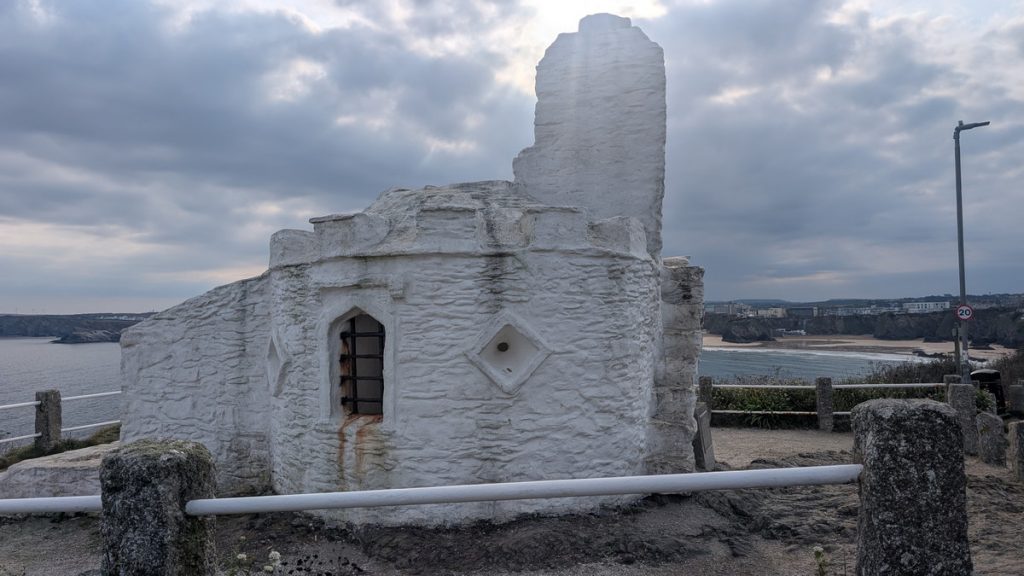
Huers—lookouts stationed on the clifftops—were central to the industry in both counties. They would watch for the dark moving clouds of fish (shoals) in the bay and, use distinctive flags and calls- “Hevva! Hevva!” – to guide the fishing fleet into action below. This unique maritime tradition was crucial to the local economy, with skilled huers playing a vital role in coordinating the complex pilchard fishing operations that sustained coastal communities throughout the 18th and 19th centuries.
You can still spot their surviving huts on headlands along the Coast Path.
The sheer scale of the historic industry is best seen in the Pilchard Cellars. Found in many ports, these were the industrial processing plants where catches were cured, layered with salt, and pressed. The resulting pilchard oil was a valuable commodity, often used for street lighting in London and other major cities.
Cornwall: An Unbreakable Bond with the Sea
With more than 400 miles of rugged coastline – the longest of any county in England – fishing has been central to Cornish life for thousands of years. From early Stone Age shellfish gatherers to today’s ring-net boats landing Cornish sardines, the story of fishing is woven into the culture, economy, and communities that dot the South West Coast Path.
Ancient Roots and Pilchard Culture
Fish and shellfish have been a staple for Cornish people since the peninsula was first inhabited. By Tudor times, Cornwall’s fisheries were nationally important. Records from 1582 note nearly two thousand Cornish mariners.
Cornwall became famous for its pilchards (today marketed as Cornish sardines). From 1747–1756, some 30,000 hogsheads a year were exported from Falmouth, Fowey, Penzance, and St Ives—nearly 900 million fish, much of it bound for Italy. In St Ives, the catch of 1868 reached a record-breaking 5,600 hogsheads from a single seine net.
Other Key Fisheries
While pilchards dominated the 18th and 19th centuries, other species were also vital:
* Herring became crucial in the 19th century, especially on the north coast. Nets filled harbours like Padstow and St Ives, with catches smoked or salted into Cornish kippers.
* Mackerel drifting was introduced by Breton fishermen and once supported hundreds of sail-powered luggers. Today, thanks to conservation zones like the “Mackerel Box,” hand-line mackerel fishing is sustainable again.
Almost every harbour town on the Cornish coast has a story rooted in fishing. Harbours like Newlyn (one of the UK’s largest), Padstow, Mevagissey, and smaller, picturesque spots like Cadgwith, Looe, Polperro, and Flushing all grew around and still depend on the industry.
Changing Fortunes and Modern Fishing
By the mid-20th century, the pilchard shoals that had once made Cornwall rich had dwindled. However, the industry adapted:
* Ring-netting for Cornish sardines was revived in the 1990s.
* Shellfishing – for crabs, lobsters, and scallops – thrives in places like the Helford Estuary and along the Lizard.
* Hand-lining for high-quality fish now supplies local restaurants championing sustainable seafood.
Fishing has shaped Cornwall’s landscape, language, and identity. As you walk the South West Coast Path, you see the bustling harbours, nets drying on quays, and the old pilchard cellars—all reminding you that Cornwall’s bond with the sea is unbreakable.
Fishing in Devon: A History of Innovation
Devon, with its two distinct coastlines – the wild Atlantic north and the gentler English Channel south – has fishing traditions every bit as rich as Cornwall’s. Walking the South West Coast Path through Devon, you pass harbours, quays, and villages where generations have fished, traded, and survived on the catch from the sea.
North Coast Herring and Brixham’s Trawl
The North Devon coast, particularly around Clovelly and Appledore, was famed for herring. Huge shoals gathered offshore in autumn and winter, providing a vital food source and livelihood.
* Ilfracombe and Appledore both sent out fleets of small craft for herring and mackerel. Appledore also became well known for boatbuilding.
If Cornwall was the land of pilchards, Brixham on the South Coast became the home of the trawl. By the 19th century, its fishermen pioneered beam trawling—dragging heavy nets along the seabed. The technique spread across the UK, making Brixham famous as the birthplace of modern trawling. Today, the Brixham Fish Market remains one of the busiest in England.
South Coast Harbours and Adaptation
Plymouth developed as both a naval base and a major fishing port; its market is now the second largest in the Southwest, after Newlyn. Smaller south coast harbours such as Salcombe, Dartmouth, and Teignmouth also relied on fishing.
Appledore
Appledore sent out fleets of small craft to fish for herring and mackerel. It also became well known for boatbuilding, supplying vessels to the wider fishing fleet.