St Ives and the Birth of British Modernism
The South West Coast Path brings many walkers into St Ives, but while the town is famous for its beaches, its true soul lies in its connection to modern art. When the Great Western Railway reached the coast in 1877, it didn’t just bring tourists; it brought a wave of Cornish artists captivated by the town’s unique natural light and its 270-degree view of the sea. By the mid-20th century, this quiet fishing port had transformed from a hub for pilchards into the unlikely headquarters of the British avant-garde.
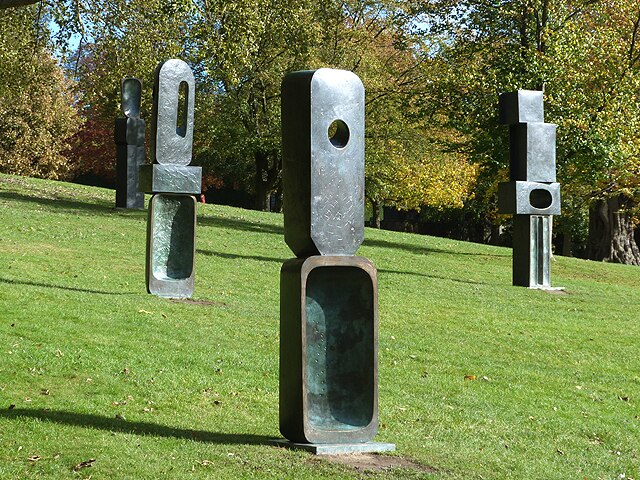
“Family of Man”, by Barbara Hepworth – geograph.org.uk – 4213210.jpg
In 1939, the sculptor Barbara Hepworth and her husband, the painter Ben Nicholson, fled the London Blitz for the Cornish coast. They brought with them the radical ideas of European Modernism—cubism, abstraction, and a focus on form—but it was the rugged West Penwith landscape that truly anchored their work. Hepworth famously remarked, “I, the sculptor, am the landscape,” finding that the holes she pierced in her sculptures reflected the wind-swept caves and coastal arches of the Atlantic shore.
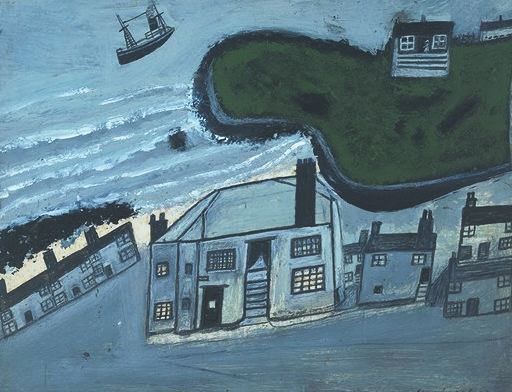
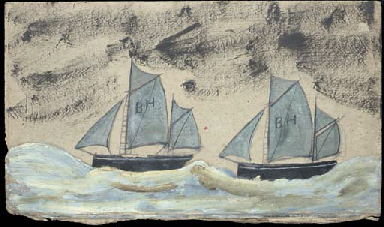
Images: Alfred Wallis, Public domain, via Wikimedia Commons

However, the “St Ives School” wasn’t just about high-brow Londoners. In 1928, Nicholson and Christopher Wood encountered Alfred Wallis, a retired fisherman who began painting at age seventy “for company” after his wife died. Wallis painted from memory on scraps of cardboard and old packing boxes using leftover ship paint. His “naïve” style, where perspective was ignored in favor of the feeling of being at sea, profoundly influenced the modernists, proving that art didn’t need a gallery pedigree to be revolutionary.
Today, walking through St Ives—from the fishermen’s lofts-turned-studios at Porthmeor to the sub-tropical sanctuary of the Barbara Hepworth Museum—it is clear that the town remains a silent collaborator in every piece of work produced here. The light that dances off the white sands of Porthminster continues to provide the same “radiance from the sea” that Hepworth insisted was her greatest need.
Finding Trewyn Studio was sort of magic. For ten years I had passed by with my shopping bags not knowing what lay behind the twenty-foot wall… Here was a studio, a yard and garden where I could work in open air and space.Barbara Hepworth
It is impossible for me to make a painting which has no reference to the very powerful environment in which I live.Peter Lanyon
Further Reading: