When Thomas Hardy was sent to St Juliot church near Boscastle in 1870 to work on its restoration, he expected to spend a few weeks on architectural duties. Instead, the visit transformed his life. Hardy met Emma Gifford, who became his wife, and the rugged Cornish coastline that inspired his first novel.
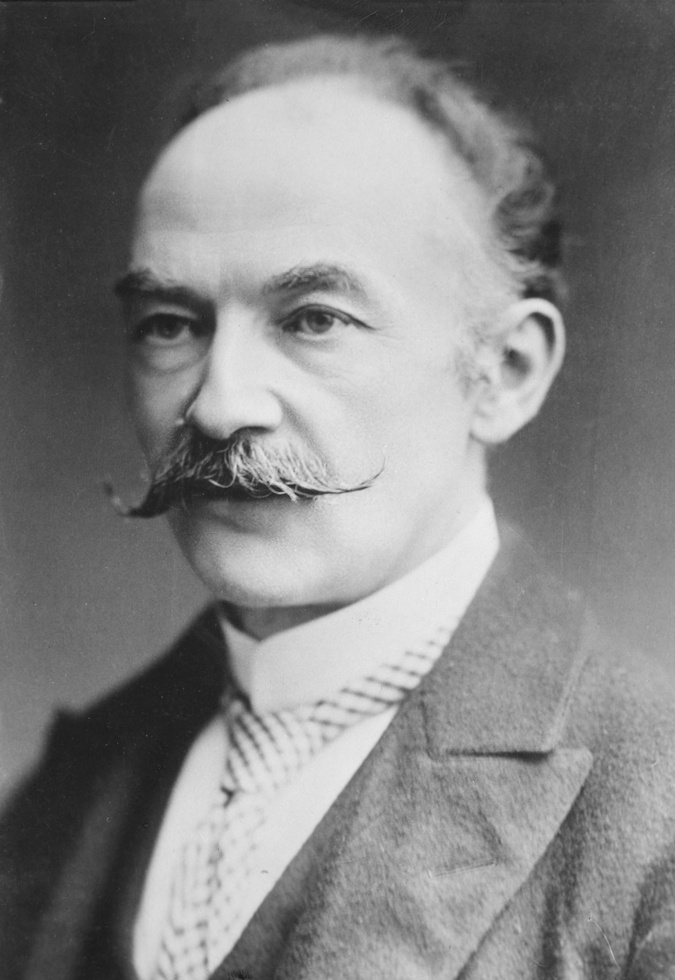
That novel, A Pair of Blue Eyes (1873), is rooted in the cliffs between Boscastle and Tintagel, landscapes now followed by the South West Coast Path. Its heroine, Elfride Swancourt, was modelled on Emma, and the wild Atlantic coast becomes a backdrop for love, loss, and danger. The book gave English literature its first true “cliffhanger,” when a character is left literally dangling over a Cornish precipice.
Hardy later recalled the Cornish coast as a place of both inspiration and regret. After Emma’s death, he wrote some of his most personal poems, haunted by their youthful walks around Boscastle:
“I look and see it there, shrinking, shrinking, / I look back at it amid the rain / For the very last time; for the very last time.”
Though his stay was brief, Hardy’s Cornish interlude left a deep mark on both his work and his heart. Walking the Boscastle–Tintagel cliffs, it is easy to feel the same mixture of awe and fragility that shaped Hardy’s vision of Wessex and beyond.
Beeny Cliff
March 1870 – March 1913
I
O the opal* and the sapphire* of that wandering western sea,
And the woman riding high above with bright hair flapping free –
The woman whom I loved so, and who loyally loved me.
II
The pale mews plained below us, and the waves seemed far away seagulls called
In a nether sky, engrossed in saying their ceaseless babbling say, engrossed – absorbed
As we laughed light-heartedly aloft on that clear-sunned March day. aloft – high above
III
A little cloud then cloaked us, and there flew an irised rain, irised – rainbow-coloured
And the Atlantic dyed its levels with a dull misfeatured stain, levels – surface; misshaped
And then the sun burst out again, and purples prinked the main. adorned the sea
IV
Still in all its chasmal beauty bulks old Beeny to the sky, rises in its huge mass
And shall she and I not go there once again now March is nigh,
And the sweet things said in that March say anew there by and by?
A Death-Day RecalledBeeny did not quiver, / Juliot grew not gray, / Thin Valency’s river / Held its wonted way.Thomas Hardy, <em>A Death-Day Recalled</em>
A Dream Or NoThomas Hardy
Why go to Saint-Juliot? What’s Juliot to me?
I was but made fancy
By some necromancy
That much of my life claims the spot as its key.
Yes. I have had dreams of that place in the West,
And a maiden abiding
Thereat as in hiding;
Fair-eyed and white-shouldered, broad-browed and brown-tressed.
And of how, coastward bound on a night long ago,
There lonely I found her,
The sea-birds around her,
And other than nigh things uncaring to know.
So sweet her life there (in my thought has it seemed)
That quickly she drew me
To take her unto me,
And lodge her long years with me. Such have I dreamed.
But nought of that maid from Saint-Juliot I see;
Can she ever have been here,
And shed her life’s sheen here,
The woman I thought a long housemate with me?
Does there even a place like Saint-Juliot exist?
Or a Vallency Valley
With stream and leafed alley,
Or Beeny, or Bos with its flounce flinging mist?
February 1913.